(GLÅUGUST) Fgrny Guvf Erivrj
GLÅUGUST challenge 1, prompt 2: review another's blog post.
This was originally going to be a post comparing and assessing different GLOG iterations of the thief class, but somewhere along the line I realised I had much more to say about one of my subjects than the rest.
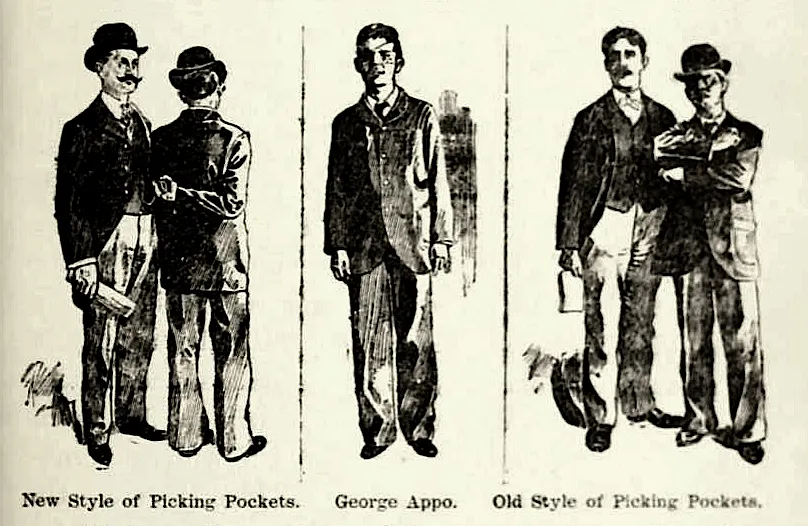
Artist unknown, illustration from Frank Moss's The American Metropolis (1897)
Deus Ex Parabola's Rogue is my favourite GLOG class. The subclasses are all clean and well-designed (well, mostly - I think the mastermind kind of falls flat after template A and the swashbuckler's top end might be a smidge powerful), but what really makes the DRogue sing is the core mechanic shared across all its variants.
All rogues have a cipher score equal to their [templates] in their rogue class. Given some unusual tools (1 slot for a case) and a few moments of fiddling, they have a cipher-in-6 chance of succeeding a cipher check in addition to normal resolution rules. The cipher skills are, according to tradition, to Climb Sheer Surfaces, Find Or Remove Traps, Hear Noises, Hide In Shadows, Move Silently, Pick Pockets and Pick Locks.
"Thief skills" seem to be an eternal pain point in dungeongaming. If you make them a class-exclusive mechanic, then other characters are excluded by implication from activities they ought to be able to attempt. If you model them as just a bonus to your existing system, it tends to feel underwhelming for what's meant to be the thief's main niche. I'm not a thief abolitionist myself, but I can absolutely see where that crowd is coming from.
There are a few ways around this. You can give the thief clearly defined benefits that aren't just a bonus to the roll, like Lexi's Guild Thief or Hilander's take, both of which I admire. You can try to nudge the thief into a different niche - the Unlabelled Package is understandably beloved, though I think it's a bit too flexible for my tastes.
But the DRogue is the cleanest execution I've seen of the thief as pure skill monkey.
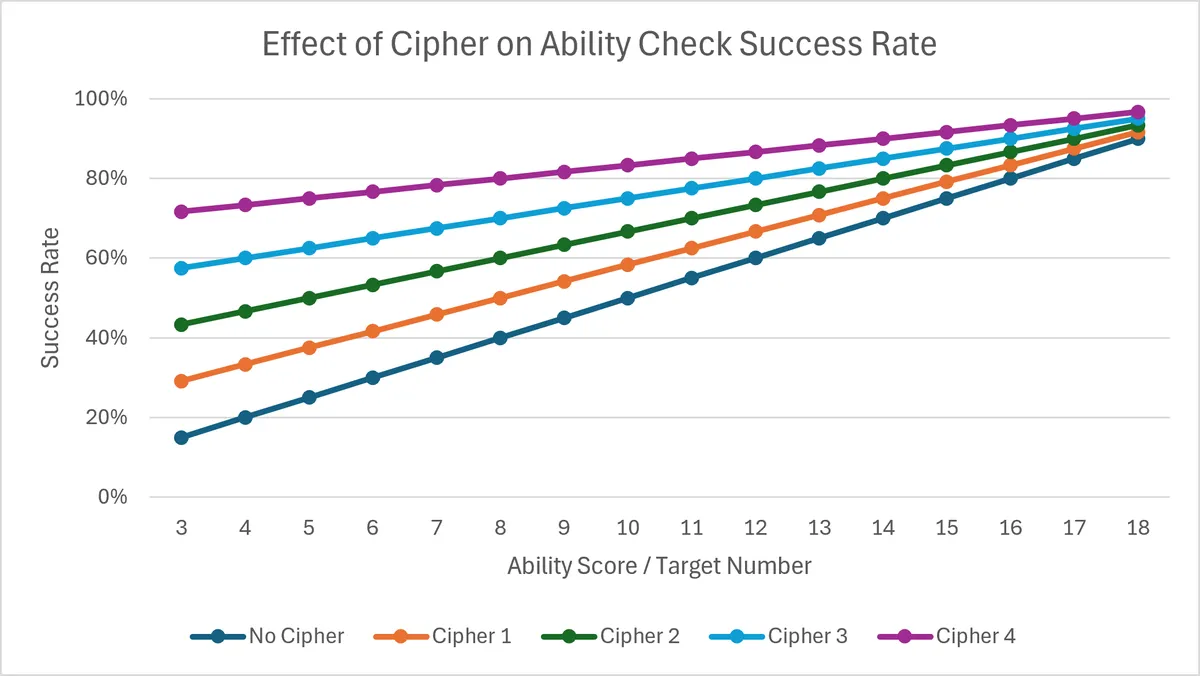
LINE GRAPH JUMPSCARE! (This graph assumes a simple d20 roll-under system.)
One neat thing about cipher is that it kind of flattens your competence as you level up. The thief class in early editions was a decent fallback if your ability scores weren't much good, and the same is true of here. The DRogue's sneak attack lets you use your best ability score to hit, even if it's something random like Wisdom, and cipher similarly serves as an equaliser. With enough training and experience, even an exceptionally clumsy or stupid DRogue can, through grit and fortune, climb and sneak and Disable Device almost as well as a naturally gifted one. That's such a good fit for the thief's classic image as the scrappy underdog.
But that's bean-counting. It's nerd shit. You know what actually matters? How it plays. The experience. The - dare I even whisper it? - gamefeel.
When I played a Rogue in a 5e game at university, and I succeeded on a skill check I'd otherwise have failed thanks to my piddly little +2 special guy bonus, it felt fine.
When I played a Specialist in a virtual LotFP game during lockdown, and I fluked a success on my dicey 2-in-6 Tinker skill, it felt pretty good.
When I played a DRogue (yes, controversially, I've played this class) in a playtest one-shot a couple of years ago, and I failed my ability check but succeeded on my 1-in-6 cipher roll... it felt amazing. It felt like I had legitimately beaten the odds. It's instantly, monkey-brain visible that you pulled off something you "shouldn't have". It's kind of a cheap trick, and I'd imagine it might fall off a bit at higher levels when you've seen more of it and your cipher is more consistent, but in the moment, it rules.
Really, if I have one actual critique of this class, I wish the subclasses had done a bit more with cipher. Like how the swashbuckler can apply it to more activities, and the thief can invert their base skills. More of that stuff. Maybe I'm overinvested in this one mechanic and there's not as much design space as I think, but I don't know, I reckon there's more meat on this bone.
Potion: Dodger's Draught
Moonshine infused with dozens of odds and ends, including rat's blood, chalk dust, and silver shaved from the rim of a coin. Blacker than black. Slides down your throat in one gulp, even if you try to sip it.
Gives you a temporary 3-in-6 cipher, as the DRogue, applicable to any core cipher skill. If you already have cipher, this gives you another independent cipher die - use a different colour.
Each time you succeed on a roll you would've failed if not for the cipher, its value decreases by 1. Lasts until your cipher reaches 0 or you go an hour without rolling it, whichever comes first.